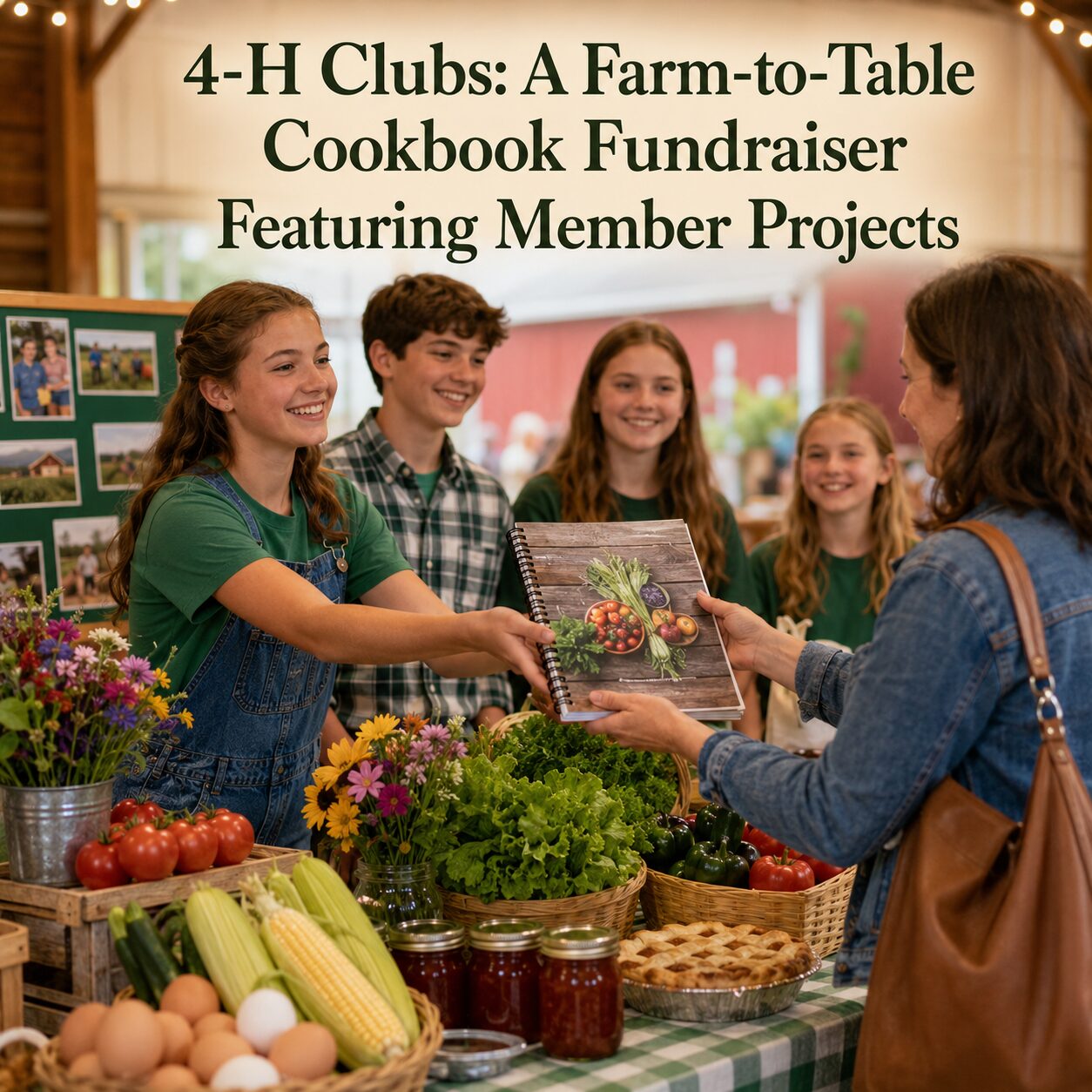
4-H Clubs: A Farm-to-Table Cookbook Fundraiser Featuring Member Projects
4-H is where kids learn the kind of skills that make adults quietly nervous and proud at the same time.
A 10-year-old can explain animal nutrition, soil health, and budgeting while you’re still trying to remember if you watered your houseplant this month. Someone is raising chickens, someone is growing tomatoes the size of softballs, someone is baking like a small-town legend, and someone is building a project that requires safety goggles and a level of confidence that should frankly be regulated.
It’s also where the costs add up: fair fees, show supplies, feed, equipment, travel, club activities, scholarships, and community service projects. Fundraisers are part of the ecosystem—but many feel disconnected from what 4-H actually is.
A farm-to-table cookbook fundraiser is the opposite. It fits the mission. It highlights member projects. It teaches real-world skills. And it produces something the community genuinely wants: a local, practical, story-rich cookbook that says, “This is what our kids are learning, and this is what our community grows.”
Here’s the sneaky-effective structure to run it.
The 4-H fundraiser pain you already know
4-H clubs often run into three fundraising problems.
First: the fundraising doesn’t showcase the program. Selling generic products can raise money, but it doesn’t tell the story of what 4-H teaches or why it matters.
Second: the time burden hits the same families. Many 4-H families are already stretched with projects, chores, and fair season logistics. Fundraisers that require extra in-person shifts can be tough.
Third: the community connection gets underused. 4-H is a local story—food, farming, skills, and service. When a fundraiser doesn’t tap into local pride, you leave support on the table.
A farm-to-table cookbook fundraiser solves all three: it’s mission-aligned, family-friendly, and community-forward. It can run largely online while still feeling deeply local.
Why a farm-to-table cookbook is a perfect fit for 4-H culture
4-H has two natural strengths that make cookbooks work:
Projects create content
Your members already produce things—vegetables, eggs, honey, meat, baked goods, canned items, herbs, jams, and more. Those projects are cookbook gold.
Education creates credibility
People trust 4-H. A cookbook featuring member projects isn’t just “recipes.” It’s “practical food knowledge from kids learning real skills.”
Also, 4-H has a built-in audience that loves this theme:
- parents and grandparents
- local farmers and growers
- fair visitors and supporters
- neighbors who want to buy local
- businesses that sponsor agriculture and youth programs
A cookbook becomes a community artifact that says, “This is what we grow here. This is how we cook it. This is who is learning to do it.”
The signature angle: “Member Projects” as the headline feature
Here’s what makes this fundraiser irresistible: it’s not just a cookbook—it’s a showcase.
Call it something like:
- “From Our Projects to Your Table”
- “4-H Farm-to-Table Favorites”
- “Local Harvest Cookbook”
- “Cooking What We Grow”
Then structure the book so the projects are visible.
Category ideas that highlight member projects:
Garden & Greenhouse
Recipes that use tomatoes, zucchini, peppers, greens, herbs, potatoes, carrots—whatever your club actually grows.
Eggs, Dairy & Morning Starts
Breakfast bakes, quiche, pancakes, custards, simple egg recipes.
Market Basket Meals
Recipes built around “what’s in season” and “what you can get locally.”
Preserving & Pantry Skills
Jams, pickles, sauces, dried herbs, freezer tips (include basic safety notes).
Baking & Fair Favorites
Breads, pies, cookies, bars—recipes that smell like a county fair.
Protein & Grill
If your members raise livestock or do meat projects, include family favorites and simple cooking methods.
Now add the real differentiator: a small “Project Spotlight” box on some recipes:
- Member name
- Project type (garden, poultry, baking, etc.)
- One sentence: “What I learned”
- Optional photo (member or project)
This makes the cookbook feel uniquely 4-H. It also gives families a reason to buy multiple copies because it features their kid and their project.
How to run it without turning fair season into chaos season
The main risk for 4-H is timing. If you schedule this fundraiser during peak fair prep, you’ll compete with reality. Instead, pick a window that supports your calendar.
Best timing options:
- early spring (before project intensity peaks)
- late fall (after fair season, great for holiday gifting)
- winter (planning season, more bandwidth)
A clean plan that works:
Pick one editor + a small committee
One editor makes decisions and keeps the timeline moving. Committee members can support sponsor outreach, recipe collection, and communications. Keep the team small and functional.
Set a 6-week timeline
Week 1: Launch theme + recipe request
Weeks 2–4: Collect recipes + sell books online
Week 5: Final edits + last-call sales push
Week 6: Publish/print + fulfillment planning
Make the recipe request specific (and project-friendly)
Instead of “send a recipe,” ask for:
- 1–2 recipes featuring something you grow, raise, or make
- include the ingredient connection (e.g., “uses zucchini” or “uses eggs”)
- optional: a short project note + photo
If members don’t have “project-based” recipes, that’s fine. You can also include:
- “family farm favorites”
- “4-H potluck classics”
- “quick meals for busy fair week”
Use club structure to spread the work
Assign each project area a goal:
- garden members: 10 recipes
- baking members: 10 recipes
- livestock families: 10 recipes
- poultry: 10 recipes
- preservation: 10 recipes
This creates accountability without pressure and makes everyone feel included.
Profit boosters that work especially well for 4-H
4-H has a rare advantage: local businesses and community members genuinely like sponsoring youth programs that teach practical skills. Use that.
Sponsor pages from local businesses
Potential sponsors include:
- farm supply stores
- feed stores
- local banks
- realtors
- equipment dealers
- veterinarians
- restaurants that source locally
- farmers markets
- co-ops
Offer simple sponsor tiers:
- Full page sponsor
- Half page sponsor
- “Community Supporter” listing
- Back cover sponsor (premium)
Tie sponsor messaging to community impact:
“Supporting youth education, agriculture, and life skills.”
Donations for supporters who want to give but don’t need a cookbook
Some people want to support 4-H directly—especially alumni and community supporters. A donation option increases total raised without adding complexity.
Sell where your supporters already gather
4-H has built-in venues:
- club meetings
- county extension events
- fairs and expos
- farmers markets
- community dinners
- holiday craft fairs
Even if ordering happens online, promotion happens in real places where people already love 4-H.
Messaging that gets members and parents to participate (copy-ready)
Here’s a clear message that aligns with the 4-H mission:
“Our 4-H club is fundraising to support member projects, fair participation, and club programs. This year we’re creating a farm-to-table cookbook featuring recipes connected to what our members grow, raise, and make. Please submit 1–2 recipes by Friday (include what project it connects to if you can) and share the cookbook link with friends and family. It’s a practical local cookbook and a keepsake that showcases our members.”
Add a line that pulls in community pride:
“Buy local. Support youth. Eat well.”
The finish: make the cookbook a showcase moment
Don’t just deliver the books—celebrate them.
Great “reveal” moments for 4-H:
- project showcase night
- end-of-year banquet
- a county extension event
- a farmers market booth
- a fair preview meeting (if timing fits)
Then wrap up with:
- total funds raised + where it goes (scholarships, supplies, travel, fair fees)
- sponsor thank-yous
- member spotlight posts featuring “project + recipe” pairings
If you run it well, this fundraiser becomes a tradition:
Every year, you add new member projects, new recipes, and new community stories.
That’s not just fundraising. That’s building a living record of local skills and local food.
Bill Rice is the Co-Publisher of Family Cookbook Project and CookbookFundraiser.com which helps individuals, churches, schools, teams and other fundraising groups create cherished personalized cookbooks using AI tools, peer-to-peer tools and the power of the Internet to meet group funding needs Follow Family Cookbook Project on Facebook, Instagram, Twitter (X), TikTok, YouTube and Pinterest!