The Art of Cookbook Design: Tips for Making Your Recipe Book Visually Appealing
Cookbooks are more than just collections of recipes; they are culinary journeys, with each page serving as an invitation to explore flavors and techniques. However, in this era of digital content and aesthetic appeal, a cookbook needs to be more than just informative – it needs to be visually delightful. A well-designed cookbook can inspire readers to not only try the recipes but also cherish the book as a piece of art. Let’s explore the elements that go into creating a cookbook that’s as visually captivating as it is deliciously informative.
Why Cookbook Design Matters:
- First Impressions Count: A beautifully designed cookbook attracts readers, urging them to delve deeper into its pages.
- Enhances User Experience: A well-laid-out design makes the cookbook easy to navigate, ensuring readers can find and follow recipes with ease.
- Tells a Story: Design elements help in narrating the story behind the recipes, whether it’s a family’s culinary heritage, a chef’s personal journey, or a celebration of regional cuisine.
Key Elements in Cookbook Design:
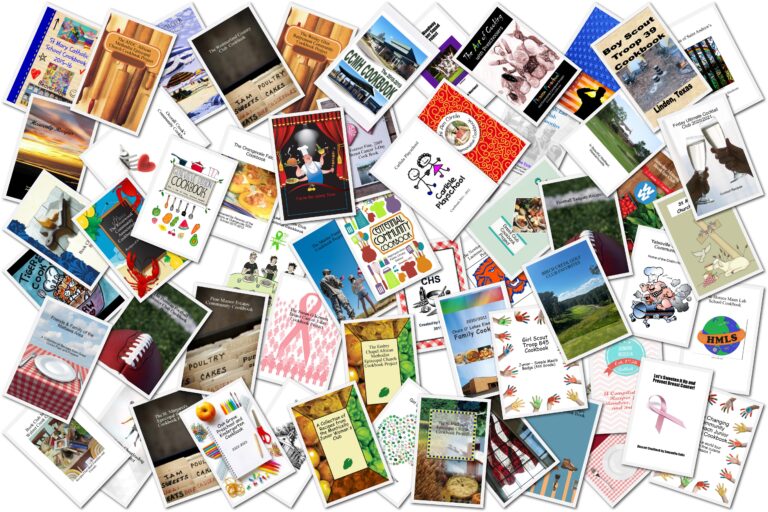
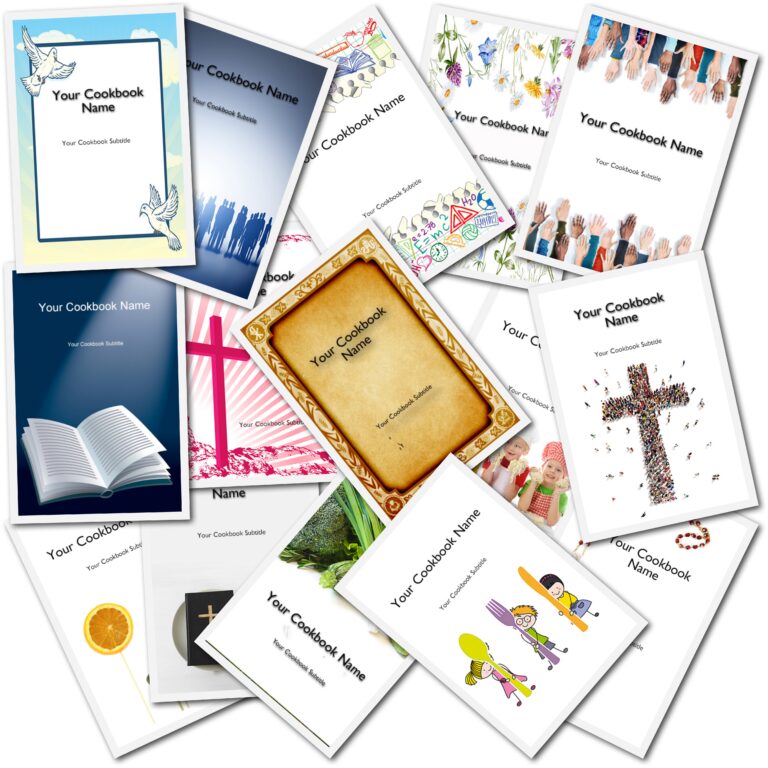
- Cover Design: Your cookbook’s cover is the first thing people see. It should be visually enticing, with a clear title, captivating image, and a hint of the culinary adventures within.
- Typography: Choose fonts that are not only aesthetically pleasing but also legible. Consider using different fonts for titles, sub-titles, and body text to create visual hierarchy.
- Layout and Spacing: Ensure there’s enough whitespace to make the page look clean. Group related information, like ingredients and instructions, for better readability.
- Quality Photography: High-quality images of the dishes can make a world of difference. Ensure they are well-lit, clear, and presented in a way that enhances their visual appeal.
- Consistency: Maintain a consistent design theme throughout the cookbook. This includes consistent use of colors, typography, and layout.
Tips for Making Your Cookbook Visually Appealing:
- Theme It Right: Decide on a theme for your cookbook, be it rustic, modern, vintage, or minimalist, and ensure your design elements align with it.
- Use Color Wisely: Colors evoke emotions. Choose a palette that complements the cuisine and the mood you wish to convey. For example, earthy tones might suit a rustic, traditional cookbook, while bright, vibrant colors might be apt for a book on summer recipes.
- Illustrations: Consider using hand-drawn illustrations or sketches. They can add a unique and personal touch, especially for highlighting certain techniques or ingredients.
- Borders and Dividers: Use decorative borders or dividers to segregate sections or recipes. This not only enhances visual appeal but also aids in navigation.
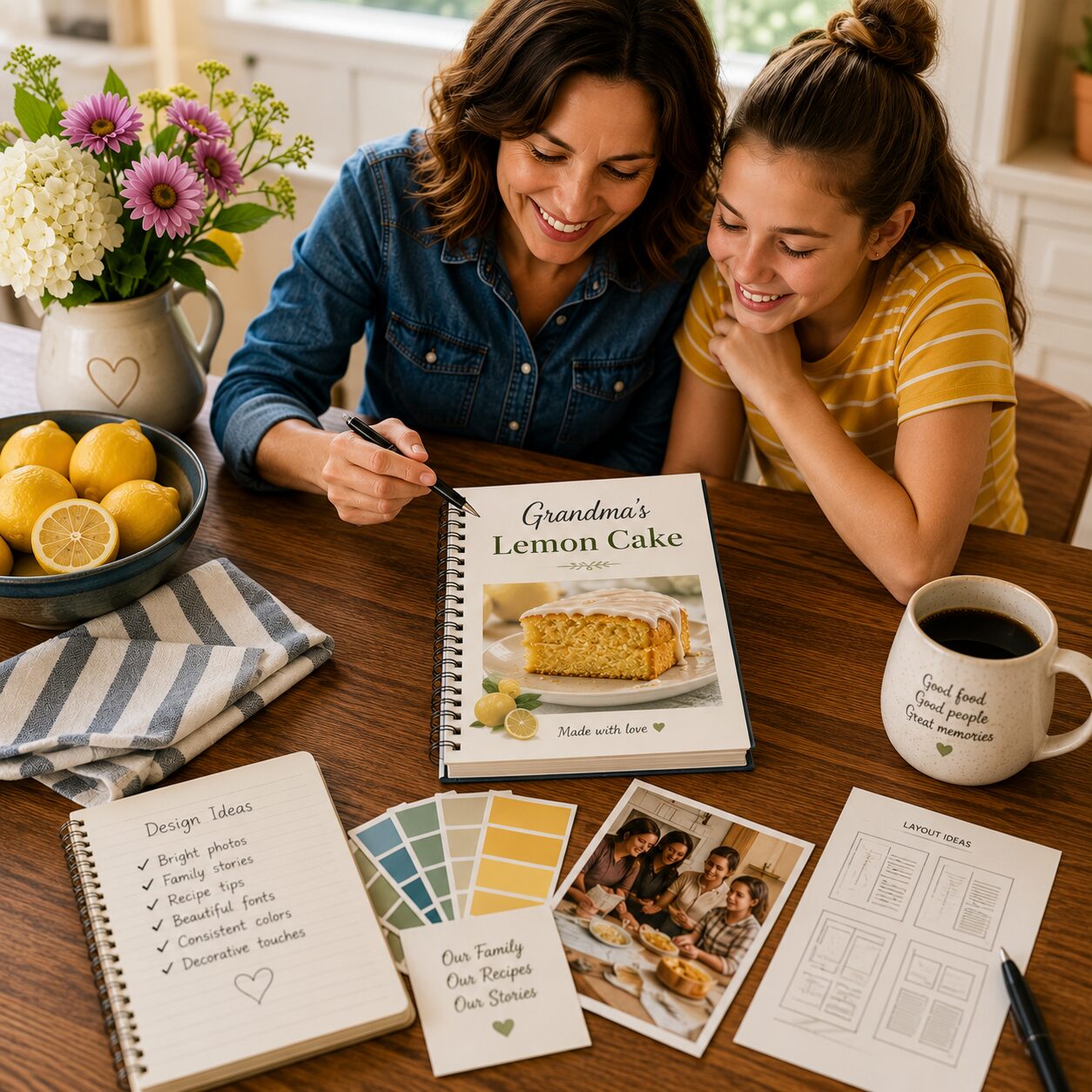
- Personal Touch: Include handwritten notes, anecdotes, or memories associated with certain recipes. This adds a personal dimension and warmth to the cookbook.
- Interactive Elements: Consider adding elements like checkboxes for ingredients or steps, or space for readers to jot down their notes.
- Index and Navigation: Ensure your cookbook has a clear table of contents and an index. Color-coded tabs or bookmarks can also enhance user-friendliness.
Using Technology for Design:
- Design Software: Tools like Adobe InDesign or Canva offer a plethora of design options and templates tailored for cookbooks.
- Digital Mockups: Before finalizing the design, create digital mockups. This gives you a preview of the finished product and allows for any adjustments.
- Feedback Loop: Share your design with friends or potential readers to gather feedback. This can provide insights into areas of improvement.
In conclusion, the art of cookbook design lies in blending aesthetics with functionality. A visually appealing cookbook not only enhances the culinary experience but also becomes a cherished possession, often passed down through generations. Whether you’re creating a family cookbook or curating a collection of global recipes, invest time and thought into its design, making it a feast for both the palate and the eyes.
CookbookFundraiser.com makes it easy and fun for schools, churches, scout troops, cub packs, and community groups to create a successful cookbook fundraiser from start to finish. Our time-tested online tools help you collect recipes from members, organize your group cookbook, customize it with your own stories and photos, and manage the entire project without the stress of paper forms or endless emails. Once your cookbook is ready, CookbookFundraiser.com also gives you the tools to sell it online, making it simple for supporters to order, share, and help raise money for your cause. From recipe collection to online sales, we provide an easy-to-use fundraising system that helps turn your group’s favorite recipes into a meaningful keepsake and a profitable campaign.
Bill Rice is the Co-Publisher of Family Cookbook Project and CookbookFundraiser.com, the leading online cookbook publisher, which helps individuals, churches, schools, teams and other fundraising groups create cherished personalized cookbooks using peer-to-peer tools and the power of the Internet to meet group funding needs. Follow Family Cookbook Project on Facebook, Instagram, X (Twitter), TikTok, YouTube and Pinterest!