Community Food Pantries: A “Stretch-the-Budget” Cookbook Fundraiser That Fits the Mission
Food pantries live in a weird reality: they’re surrounded by generosity, and still constantly bracing for shortage.
You see it in the donation drives, the volunteer shifts, the boxes being packed, the quiet dignity of neighbors helping neighbors. You also see it in the math—demand goes up, costs go up, and the mission stays the same: get good food to people who need it.
Fundraising for a food pantry has a special challenge. You don’t want something that feels disconnected from the mission, wasteful, or overly “sales-y.” You want something practical, respectful, and helpful—something that raises money while also serving the community.
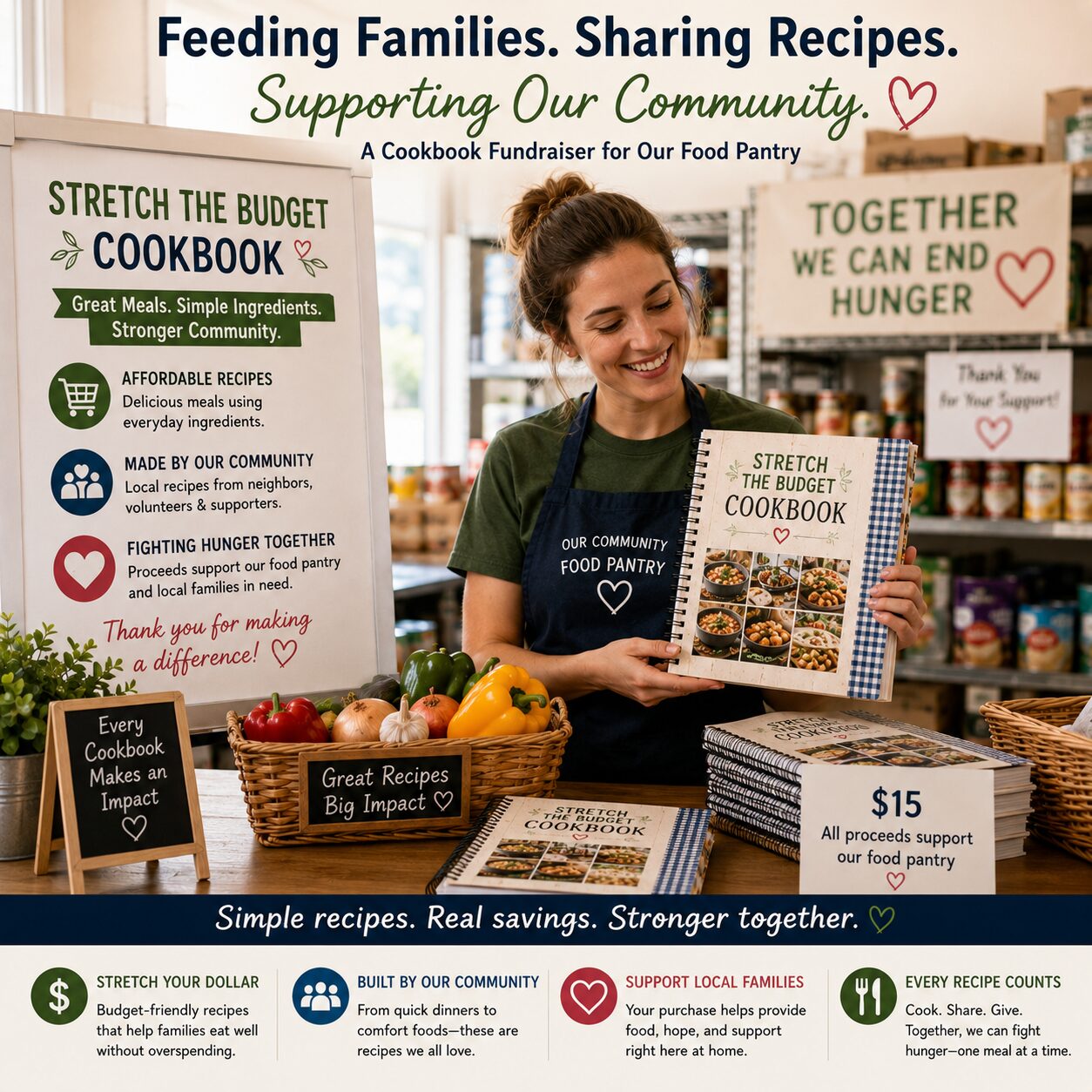
A “Stretch-the-Budget” cookbook fundraiser is exactly that. It’s mission-aligned, useful to donors and clients alike, easy to participate in, and it creates a resource the community can actually use: affordable, flexible recipes built around pantry staples.
Here’s the sneaky-effective structure that makes it work.
The food pantry fundraiser pain you already know
Food pantries face three fundraising friction points.
First: constant need. Pantry budgets aren’t seasonal. Food purchasing, refrigeration, truck expenses, storage needs, and staffing demands continue year-round.
Second: mission integrity. A fundraiser that creates waste or feels “off-brand” can clash with the pantry’s values.
Third: donor fatigue. Many supporters want to help but don’t always know the most effective way. They may donate food sometimes, money sometimes, volunteer sometimes—and a fundraiser has to be worth their attention.
A stretch-the-budget cookbook fundraiser helps because it’s directly connected to the mission: helping families make the most of the food they have. It also provides a tangible product donors like to buy and gift, while creating a tool that can be shared with pantry clients.
Why a budget-friendly cookbook fits a food pantry better than almost any other fundraiser

A pantry cookbook isn’t just “recipes.” It’s empowerment.
It meets people where they are:
- limited budgets
- limited time
- limited equipment
- limited ingredients
- unpredictable pantry boxes
And it gives real help:
- how to turn shelf-stable items into meals
- how to stretch proteins
- how to use leftovers safely
- how to make vegetables and grains feel satisfying
It also makes donors feel good in a concrete way:
“I bought something that supports the pantry and helps people cook with what they receive.”
That’s a clean story donors are happy to share.
The signature angle: “Stretch-the-Budget” with pantry staples + simple swaps
The theme is the hook: Stretch-the-Budget.
But the special twist is how you design the cookbook. Don’t just collect random recipes. Curate them around pantry reality.
Create categories that mirror what pantries distribute most often:
Pantry Staples, Big Results
Rice, pasta, beans, canned tomatoes, canned vegetables, broth, oats, peanut butter.
Protein Stretchers
Recipes that make a little meat go farther (tacos, soups, casseroles, stir-fries) and meatless meals that still feel filling.
Beans & Lentils That Don’t Taste Like “Plan B”
Chili, dals, bean salads, soups, skillet meals.
Canned & Frozen Vegetable Wins
Ways to make shelf-stable and frozen vegetables taste great.
Breakfast for Dinner
Cheap, fast, and kid-friendly.
One-Pot & Sheet-Pan Meals
Minimal dishes, minimal equipment.
Leftover Makeovers
Fried rice, soups, casseroles, wraps—practical and safe.
Now add the “pantry-friendly” features that make the book genuinely useful:
Ingredient swap boxes
- “No eggs? Try this.”
- “No milk? Use this.”
- “No fresh onions? Use onion powder.”
- “No chicken? Use beans.”
Cost-conscious tips (no shaming, just help)
- batch cooking basics
- freezer tips
- how to use spices to upgrade inexpensive meals
- how to read “best by” dates realistically (with basic safety guidance)
“Minimum equipment” tags
Label recipes that only require:
- microwave
- hot plate
- single pot
- oven optional
That’s huge for clients who don’t have full kitchens.
How to run it without creating extra strain on pantry staff
Pantry staff and core volunteers are already busy. The fundraiser needs to run smoothly with minimal overhead.
Pick one editor and a small volunteer team
The editor coordinates recipes and final decisions. Volunteers help gather recipes, test a few top ones, and promote the cookbook. Keep it lean.
Set a simple 6-week timeline
Week 1: Announce cookbook + mission + recipe request
Weeks 2–4: Collect recipes + open ordering
Week 5: Final edits + last-call push
Week 6: Publish/print + delivery plan
Make recipe collection targeted
Ask supporters to submit recipes that:
- use common pantry items
- feed a family
- can be scaled
- don’t require specialty ingredients
This prevents the cookbook from filling up with recipes that look nice but don’t serve the mission.
Invite community partners to contribute
Great contributors include:
- local chefs who support the pantry
- nutrition educators
- extension offices
- school family consumer science teachers
- community members who are great “budget cooks”
This also broadens your promotional reach.
Profit boosters that match the pantry mission
Food pantries can raise more with a cookbook fundraiser by adding options that feel values-aligned.
Sponsor pages from local businesses
Sponsors can underwrite printing or add profit. Ideal sponsor types:
- grocery stores
- local banks
- credit unions
- pharmacies
- restaurants
- health clinics
- community foundations
- farms and farmers markets
Keep sponsor messaging community-focused:
“Supporting food access and dignity.”
Donation option for people who want to help without buying
Many supporters will donate directly. Make that option clear, especially for those who already have too many cookbooks.
“Buy One, Gift One” or “Sponsor a Copy” (powerful and mission-perfect)
This is the pantry’s secret weapon.
Offer an option where supporters can:
- buy a cookbook for themselves
- sponsor an additional copy to be given to pantry clients or distributed through partner agencies
This turns the fundraiser into direct service. It’s also easy for donors to say yes because it feels tangible and aligned.
If you can, add a “sponsor a copy” note:
“Your purchase helps fund pantry operations—and sponsored copies help families cook what they receive.”
Messaging that gets donors and community members to act (copy-ready)
Here’s messaging that fits the mission and feels good to share:
“We’re creating a ‘Stretch-the-Budget’ community cookbook to support our food pantry. It’s filled with practical, affordable recipes using common pantry staples—plus easy swaps and tips for making the most of what you have. Proceeds support food access in our community. You can help by purchasing a cookbook, sponsoring a copy for a pantry client, or making a donation.”
Short, mission-aligned, and easy to understand.
For social media:
“Practical recipes. Real impact.”
The finish: make the cookbook part of the pantry’s ongoing impact
Don’t just ship the books and move on. Use the cookbook to strengthen the pantry’s story.
Great wrap-up moves:
- announce total funds raised and what it funds (food purchasing, refrigeration, delivery costs)
- thank sponsors and contributors publicly
- share a “recipe of the week” series from the cookbook
- include pantry staple tips in newsletters
If you distribute sponsored copies to clients, do it respectfully:
- include the cookbook as a resource, not a “handout”
- consider offering it through partner programs like cooking classes, nutrition education, or family resource centers
That keeps the focus on dignity and usefulness.
A “Stretch-the-Budget” cookbook fundraiser works because it doesn’t just raise money—it helps people eat better with what they have. It aligns with the mission, supports the pantry’s work, and gives donors a practical product they’re proud to buy.
It’s one of those rare fundraisers where the product isn’t a side quest. It is the mission.
Bill Rice is the Co-Publisher of Family Cookbook Project and CookbookFundraiser.com which helps individuals, churches, schools, teams and other fundraising groups create cherished personalized cookbooks using AI tools, peer-to-peer tools and the power of the Internet to meet group funding needs Follow Family Cookbook Project on Facebook, Instagram, Twitter (X), TikTok, YouTube and Pinterest!5 high-traffic hashtags